

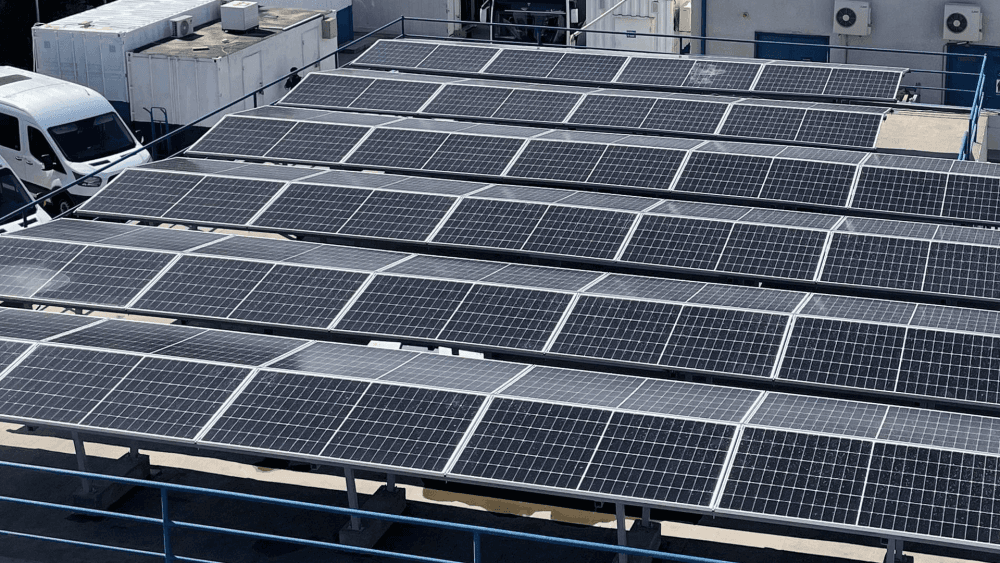
Schlumberger Baku runs on solar energy!
Let's start with a question:
If even an international energy giant installs solar panels on the roof of its office, what is the reason?
The answer is simple: the future lies in the sun.
Why solar energy?
Demand for electricity in Azerbaijan grows every year. For large corporate facilities in particular, energy costs are no longer just a financial issue but also a measure of reputation and sustainability.
That is exactly why Schlumberger chose an alternative energy system for its Baku office. This step means both lower costs and a demonstration of the company's environmental responsibility.
About the project
In this project, carried out by the Helind Enerji team:
- 210 solar panels were installed (Resun Solar 585 W, Half-Cut technology);
- 1 Solis 100 kW inverter was used;
- total power: 115.5 kWp;
- system type: on-grid solar panel system.
This setup produces about 140,932 kWh of electricity a year. That equals the annual consumption of hundreds of homes.
Making the numbers easier to grasp
- 65 tons of CO₂ emissions avoided → equal to the air cleaned by more than 3,000 trees in a year.
- 140,000+ kWh of energy produced → as much as the annual electricity use of hundreds of families.
- Performance Ratio: 88.7% → a very high figure by world standards.
The strategic importance of the solar panel system
A global company like Schlumberger investing in solar panels sends a message:
- energy saving is not just a trend but a necessity;
- an alternative energy system is at the heart of global companies' sustainability plans;
- in sunny countries like Azerbaijan, a solar panel system is the most realistic solution.
Helind Enerji's role
For us, this project was not just an installation. It is a real example of the corporate-scale shift to solar energy in the Azerbaijani market.
At Helind Enerji, we see each panel not just as equipment but as a symbol of long-term energy stability and savings.
The Schlumberger project showed that with solar energy, bills don't just go down: the company also gains a green image, moves closer to its ESG goals and secures its place on the energy map of the future.