

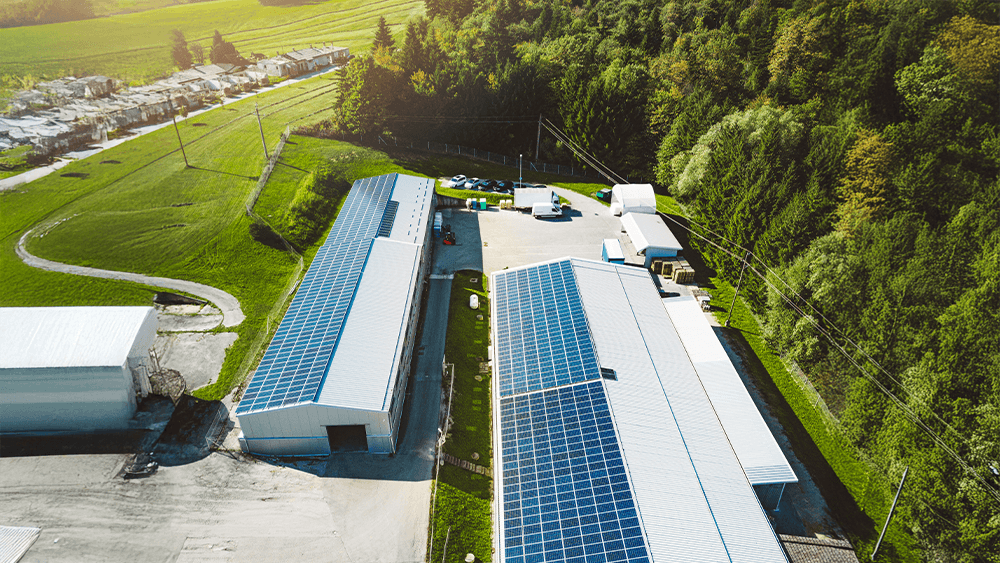
A new era in industrial energy consumption
Rising energy costs
Industrial enterprises, especially plants and factories, are among the biggest energy consumers. Whether it is heavy technology or production lines running 24/7, the demand for electricity and heat is extremely high. This can push monthly electricity bills into millions of manats.
The main energy problems of industrial enterprises
- Unstable power supply
- Production stoppages caused by power cuts
- Rising energy tariffs and currency fluctuations
- High carbon emissions and environmental criticism
Why is solar energy the strongest alternative for industry?
Large-scale generation potential
With solar energy, industrial facilities can meet their own electricity needs and free themselves from external energy dependence. Solar panel systems from 50 kW up to 1 MW can be installed. These systems can produce thousands of kWh of energy a day.
Long-term savings on electricity
Over 10 years, energy savings of 50–70% on average are achievable. Over 20 years, the system can pay for itself 3–4 times over. That is a significant financial advantage for plants and factories.
Real application scenarios for solar panels in plants and factories
Rooftop systems
The large roofs of production facilities are an excellent opportunity for installing solar panels. Panels make it possible to use 100% of the roof area effectively.
Ground-mounted systems
If roof space is limited, the land around plants and factories can be turned into solar parks. About 1 MW of capacity can fit on 1 hectare.
Hybrid systems (grid + battery)
Batteries can be added to on-grid systems to improve supply stability. Energy is produced during the day, and backup batteries provide power at night.
Production sustainability and green certificate benefits
ISO 50001 and green energy standards
To become more competitive on international markets, enterprises seek ISO 50001 and other green energy certificates. Solar panel systems play a direct role in achieving these standards.
An environmental edge when entering foreign markets
Import and export partners rate enterprises with minimal environmental impact more highly. European markets in particular are very sensitive to carbon footprint and energy sources.

State support and tax incentives
Current opportunities and future potential
The state of Azerbaijan supports new initiatives in alternative energy. Special subsidies, tax incentives and technical support programmes for industrial enterprises are planned for the future.
Examples from industrial parks
For example, the 129 kW solar power system we installed at a plant in Aghdam has enabled the plant to make significant savings on electricity.
The difference in numbers: the experience of plants that switched to solar
Real local and regional examples
In Azerbaijan, several manufacturers have already switched to solar power as part of pilot projects. For example:
- A plastics manufacturer in Sumgayit Industrial Park produces 11,000 kWh a month with a 100 kW system and has cut its electricity costs by more than 60%.
- A furniture factory in Ganja covers 70% of its energy needs with rooftop panels and exports the surplus to the national grid.
Enterprises like these save money and, thanks to their green energy policies, expand their opportunities to work with international brands.
Examples from abroad: China, Germany, India
- China: the world's largest solar energy producer, where most industrial facilities draw power from rooftop panels.
- Germany: thanks to solar energy policy, industrial enterprises are encouraged with tax incentives and "green certificate" benefits.
- India: in regions with energy shortages, solar energy has become a reliable power source for factories.
Overall, experience shows that solar energy is an effective and profitable investment for industry.
Installing an industrial solar system with Helind Enerji
Technical design
Helind Enerji carries out a dedicated energy analysis for industrial facilities. Each enterprise gets an individual design based on its area, working hours, energy load and type of production line. The goal: maximum output and minimum payback time.
Choosing reliable equipment and the installation process
- Panels and inverters made in Europe and Asia
- Special systems for enterprises that need battery technology
- Technical installation and testing
- Compliance with ISO and industry standards
Installation takes 7–20 working days (depending on system size), and the enterprise can keep operating without interruption.
Frequently asked questions (FAQ)
1. Will production have to stop while the solar panels are installed?
No. Installing the system does not disrupt the enterprise's operations. Integration is carried out by a professional technical team and completed without any power interruption.
2. How does the system work at night?
There are two options at night: drawing energy from the grid (on-grid) or using energy stored in batteries during the day (hybrid/off-grid).
3. How many years does payback take?
Typically, the system pays for itself in 3.5–6 years. In enterprises with high production, this period is even shorter.
4. Is connecting to the grid essential?
Connecting to the grid is not required. But on-grid systems are more cost-effective because they allow surplus energy to be sold to the grid.
5. How is the cost calculated?
The system cost depends on the number of panels, the inverter, the need for batteries and the location of the facility. Helind Enerji determines it during a free technical inspection.
6. How often is servicing needed?
Cleaning the panels 1–2 times a year and an annual technical check of the system are recommended.
Conclusion: switch to solar now for a competitive edge
Lower costs
Energy consumption is one of the biggest costs for industrial enterprises. Solar energy cuts these costs by 50–70% and strengthens the enterprise's financial resilience.
Higher brand value
Enterprises that use green energy look more reliable, modern and socially responsible to customers. This has a direct impact on sales and brand strength.
A strategic step towards sustainable growth
Switching to solar energy is not just a technical step but a strategic one. In terms of energy security, environmental compliance and financial stability, it is an investment in the enterprise's future.
Install the energy of the future at your plant!
Helind Enerji will deliver a solar system that fits your industrial facility 100%, with individual technical analysis, design and professional installation. Contact us today and take a step towards energy independence!