

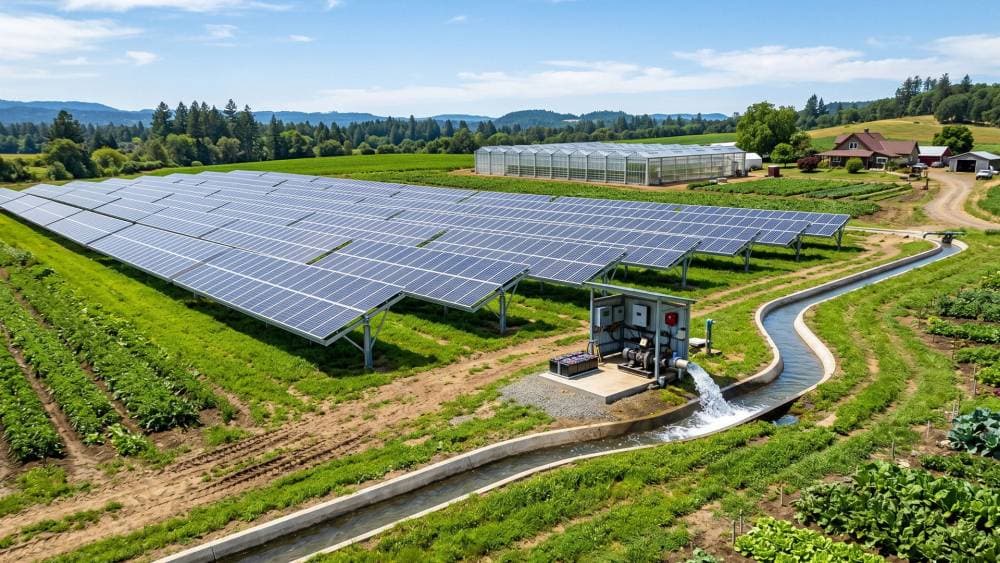
Does the lack of electricity in remote fields, or frequent outages, affect your yields? Is the money you spend on diesel generators and their endless repairs eating into your income? In agriculture, especially in farming areas, solar energy is no longer a luxury but a necessity for staying competitive and cutting costs. If your farm is off the grid, this article shows how solar panels become a real lifesaver.
📌 Key points
- The ideal solution for remote areas: if there is no power in the field, battery-based (off-grid) solar systems are the only and most reliable option for farms.
- An end to irrigation costs: solar-powered pumps bring expensive diesel and petrol costs down to zero.
- Greenhouse automation: installing panels for a greenhouse covers climate control (ventilation, heating) and lighting at minimal cost.
- Fast payback (ROI): in agriculture, solar energy systems (especially when they replace generators) usually pay for themselves in 2–4 years.
4 applications of solar energy in agriculture
Our farmers and agribusiness owners keep costs to a minimum by using solar energy mainly in these four strategic areas:
1. Off-grid irrigation systems (an end to diesel generators)
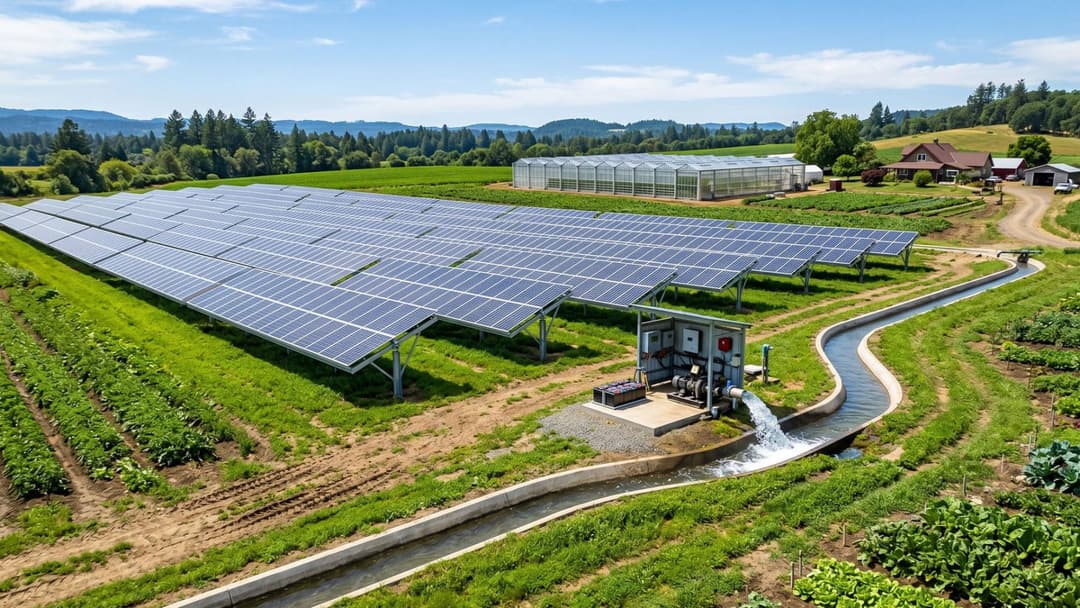
The biggest problem on large farmland is pumping water over long distances or from deep wells. If there is no state power line in the field, the traditional answer is a diesel generator. But solar-powered irrigation systems run completely autonomously. While the sun is up, the pump moves water, and you don't have to haul fuel or repair engines.
2. Energy independence for greenhouses
Modern greenhouses are not just plastic and steel; they need powerful ventilation, humidity control, heating and artificial lighting. Installing panels for a greenhouse keeps exactly these devices running continuously. By installing panels on open land next to the greenhouse or on the roofs of outbuildings, you can meet the energy needs of a fully automated greenhouse.
3. No power in the field: fully off-grid solutions
Livestock farms, poultry units and beekeeping operations are often far from towns. Running a power line for kilometres is very expensive and often runs into red tape. Battery-based off-grid solar power stations are the ideal solution here. During the day, the panels both power the farm and charge the batteries. At night, the system runs on the batteries and keeps the farm lit and active 24/7.
4. Crop storage and cold stores
To keep harvested produce from spoiling, it must be stored in cold rooms (stores). These rooms use a lot of electricity. Especially in summer, when the sun is strongest and cooling is needed most, panels perform at their peak and bring the store's energy costs close to zero.
❓ Frequently asked questions (FAQ)
Q: There is no power line at all in the field. Will solar panels be enough on their own?
A: Yes. This is called an off-grid system. With solar panels and special gel/lithium batteries, your farm gets power 24 hours a day, completely independent of the central grid.
Q: Are greenhouse panels installed directly on the greenhouse glass or roof?
A: Usually not, because the panels can block the sunlight the plants need. Instead, they are installed on open land next to the greenhouse on special ground-mounted structures or on the roofs of other enclosed buildings on the farm.
Q: Do solar-powered irrigation pumps work at night?
A: If a battery system is installed, yes. But a cheaper and more effective method is to use the free daytime energy from the panels to pump water into large tanks (ponds) and then use that stored water for gravity-fed irrigation at night.
Want to free your farm from the burden of diesel generators and high electricity bills?
Whether it's irrigation in a remote field or automating your greenhouse, contact Helind's engineers today to find the off-grid solution that suits you best. We'll come to your farm, inspect it and carry out a completely free calculation!