

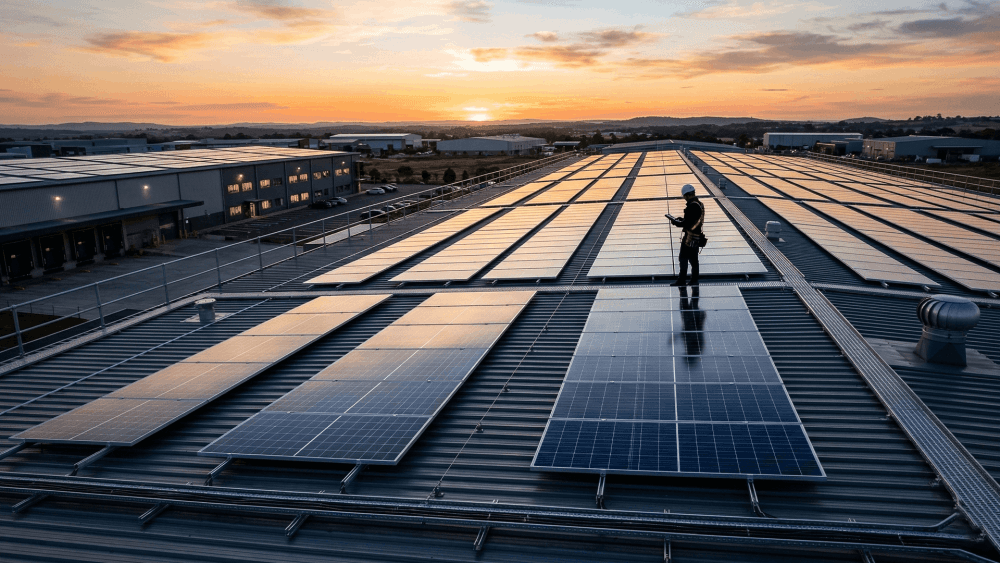
For industrial enterprises and production lines, electricity is one of the biggest and most unavoidable costs. Operating costs and tariffs that rise every year, plus unexpected power cuts, can eat into your profitability. So how do your competitors gain a market edge by paying up to 40% less for energy? Today, many leading plants don't just cut costs; they achieve full or partial energy independence with industrial-scale solar energy systems.
📌 Key takeaways
- Big savings: properly designed solar power stations can cut factories' monthly energy costs by 40–60% depending on operating mode.
- Fast ROI (return on investment): at facilities with high energy consumption, solar panels usually pay for themselves in 3–5 years and then provide free energy for the next 20+ years.
- Carbon footprint and export advantage: companies using "green energy" find it easier to meet environmental standards (ESG) when entering international markets.
- Uninterrupted production: with hybrid systems or backup batteries, production can continue even during grid outages.
Why should industrial enterprises act right now?
The best business investment is one that reduces risk and generates stable returns. Your factory's large roof is actually a big idle asset. By covering it with solar panels, you turn your plant into a small power station. Enterprises that run intensively on day shifts in particular consume the energy they produce directly and keep grid dependence to a minimum.
The best system configurations for factories
Two main types of system are usually used for production facilities. The choice depends on the factory's operating mode and budget:
| System type | How it works | Who is it ideal for? | Main advantage |
| On-grid (grid-connected) | Runs directly in parallel with the grid. No battery. The energy produced is used immediately. | Heavy industry and factories that work intensively during daylight hours. | The shortest payback (ROI) period and low installation cost. |
| Hybrid (battery-backed) | Connected to the grid while also storing backup energy in batteries. | Production with night shifts or operations sensitive to power cuts. | Keeps critical equipment from stopping even during outages. |
❓ Frequently asked questions (FAQ)
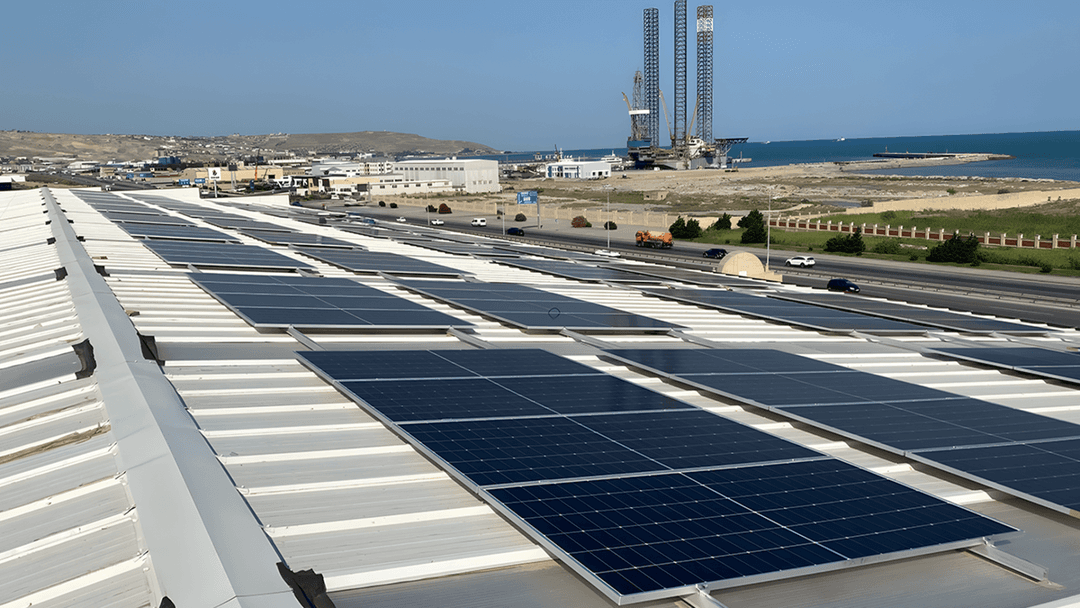
Q: Can a factory's metal or sandwich-panel roof bear the weight of solar panels?
A: Yes. Modern solar panels are quite light (about 12–15 kg per square metre). Before installation, engineers calculate the roof's static load and mount the panels on special aluminium frames without damaging the roof.
Q: Is solar energy worthwhile for factories with night shifts?
A: Yes, with hybrid systems (batteries) you can use energy stored during the day at night. Another option is net metering, where the surplus energy you feed into the grid during the day is offset against your night-time consumption.
Q: Does installing the panels stop production?
A: No. Installation work takes place mainly on the roof, so it doesn't interfere with the plant's internal production. The final connection to the grid can be scheduled for hours when the plant isn't running (for example, a Sunday).
Ready to cut your production costs?
Want to see in exact numbers how much energy your factory could save? Contact Helind's engineers for a free preliminary calculation based on your site location and energy consumption. Stay a step ahead of the competition!