

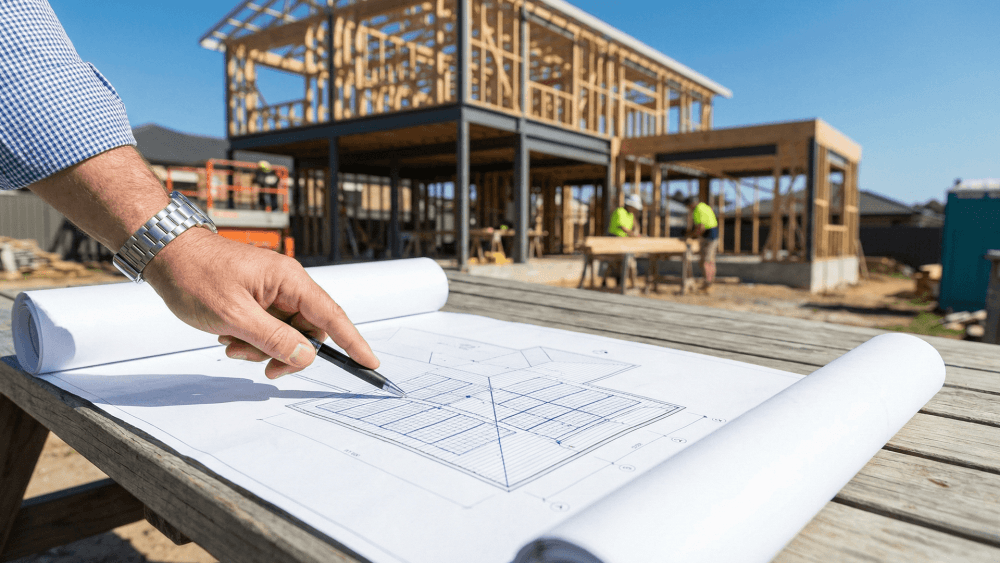
Many homeowners come to Helind Enerji after they have finished building their dream home and put the roof on: "I want to install solar panels too."
Unfortunately, our engineers sometimes have to look at the roof layout and say: "This roof is not suitable for panels" or "Some demolition work will be needed."
Why should you dig into a newly built home again to run cables? Why should a badly placed chimney shade the sunniest part of your roof?
In this article, we share the critical points to consider at the design (architecture) stage. Be sure to show this checklist to your architect or building crew.
💡 Key points:
- Orientation: the south-facing surface of the roof should be as wide as possible.
- Hidden infrastructure: cables should run under the plaster so walls don't have to be drilled later.
- Shading factors: chimneys, ventilation pipes and water tanks should be planned so they don't block the panels.
- Load: the roof structure must account for the extra weight of the panels (~15–20 kg per square metre).
1. The "golden rule": roof orientation and angle
For Azerbaijan (the Northern Hemisphere), the most productive direction for solar panels is south.
When the architectural design is drawn up:
- Orientation: the largest area of the roof should face south. East- and west-facing roofs lose 15–20%, and north-facing roofs can lose more than 40%.
- Angle: the ideal roof pitch for Baku and Absheron is 25–30 degrees. This angle ensures maximum light in both summer and winter and helps rain clean the panels.
2. The biggest enemy: chimneys and antennas
For aesthetic reasons, architects often place chimneys in the middle or at the front of the roof. But for a solar panel, even 1 cm² of shade can reduce the output of the whole system.
Recommendation:
Put chimneys, water tanks, ventilation outlets and satellite dishes on the north side of the roof. Keep the south side "clean" so the panels can be laid out as one continuous field. That means both a good look and high energy output.
3. Where will the cables run?
Nobody likes drilling walls and adding cable channels after the renovation is finished.
When running electrical wiring during construction, keep these in mind:
- Cable shaft: leave an empty conduit from the roof (panels) to the utility room or next to the entrance.
- Inverter location: set aside a cool, ventilated wall for the inverter (garage, basement or utility room).
- Grounding: install a professional grounding loop when the foundation is laid. For a solar power station, this is a safety requirement.
4. Aesthetics: panels as part of the home
If planned properly, solar panels look like an element of modern design rather than a "foreign object" on the roof.
At Helind Enerji, we work with architects and can offer BIPV (building-integrated photovoltaics) solutions or simply aesthetic mounting systems that sit flush with the roofing.
Helind's checklist for architects:
Before approving the design, answer "yes" to these questions:
- [ ] Is the south face of the roof free of shade?
- [ ] Is the roofing (corrugated sheet, tiles) suitable for fixing panels?
- [ ] Is there a hidden cable route from the roof to the electrical panel?
- [ ] Is there indoor space set aside for the inverter and batteries?
Frequently asked questions (FAQ)
Question: Is a flat (concrete) roof better, or a pitched one?
Answer: Both work. On a pitched roof, the panels lie along the roof (cheaper). On a flat roof, we build a special structure and can give the panels the angle we want, but this increases the structure cost somewhat.
Question: I'm building my house now but will add panels in 2 years. What should I do?
Answer: At least prepare the cable routes now. It will save you a lot by avoiding tearing down walls later. Contact us and we'll give you a "preparation plan".
🏗️ Let the energy be ready before the house is
Have you started construction or are you at the design stage? Send us a photo or sketch of the design. Helind's engineers will prepare the most effective panel layout for you.
👉 [Send your design and get a consultation]
📞 Contact: +994 50 678 99 11
Author: Helind Enerji – a future built with engineering precision.