

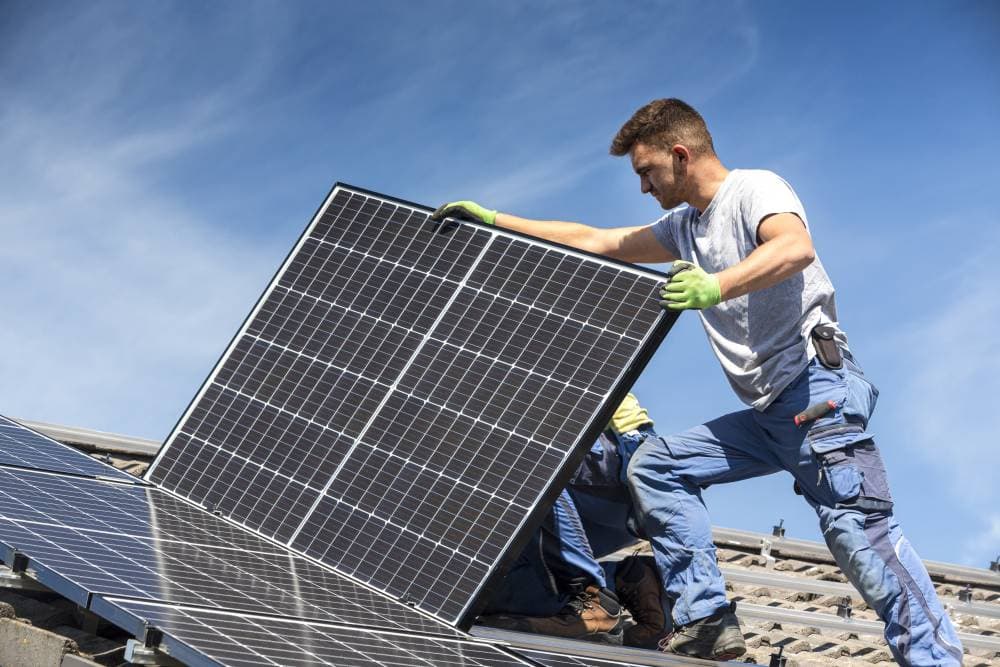
Solar energy systems are spreading fast, and in Azerbaijan hotels, factories and private homeowners have already started to benefit from this technology.
But one question is often overlooked:
Is your roof suitable and large enough for solar panels?
Focusing only on the price and power of the panel is a mistake. The key question is:
Do the size, structure and position of your roof allow for the system you are planning?
In this article, we explain which technical calculations matter before you decide.
1. How much space do you need for solar panels?
Let's start with a simple calculation:
- A 1 kW solar panel system needs about 6–7 m² of roof.
- For example, a 10 kW system needs at least 70 m² of unshaded, flat and solid roof.
As system power increases, roof area limits come into play. Especially in multi-storey hotels and business centres:
- electricity consumption grows,
- but the roof area stays the same and remains limited.
2. Space alone is not enough: the structure matters too
It is not only the size of the installation area that matters but also its engineering suitability.
Key points to check:
- Roofing material: concrete, metal, slate?
- Load-bearing capacity: panels + mounting structure + snow loads in winter
- Roof pitch and orientation: the most effective angle is 25°–35°. The orientation should face south as far as possible.
If the roof has no pitch or does not face south, energy output can drop significantly.
3. Shading: the factor that weakens the whole system
If your roof has any of the following, energy production can suffer seriously:
- tall chimneys,
- air conditioning units,
- antennas or water tanks,
- nearby trees or other buildings.
Shade on just one panel can reduce the output of the whole panel string. That is why shading must be measured with professional equipment.
4. Matching your energy consumption
When planning the panel area, it is not just the roof that matters but also your energy consumption.
The goal should not just be "how many panels can we fit" but "how much energy does the building need and how much of it can we cover".
If your building consumes a lot but the roof is limited:
- it may not be possible to cover the full demand,
- but even a partial saving still has a strong impact on your budget,
- alternatively, ground-mounted or facade panels can be considered.
4.1. If there is no room on the roof, which other areas can be used?
Sometimes the roof area is not sufficient technically or physically. But that does not mean solar is off the table: other open areas of the property are potential energy zones too.
Alternative locations:
- The yard or car park (carport systems)
- The roofs of warehouses or other outbuildings
- Vacant land or the perimeter of the complex
Systems in these areas can be installed:
- on ground supports (ground-mounted),
- or as structural canopy systems.
These installations may involve extra structure and cabling costs, but thanks to their output and planning freedom they often turn out to be the more efficient solution.
The key point: the space is there, but it needs proper analysis and planning.
5. Number of panels and power choice
Panels come in different power ratings: 500 W, 600 W and even 700 W.
If roof space is small, choosing high-power panels gives you maximum output per area.
In other words, by placing fewer but more powerful panels in the same area, you can optimize energy performance.
6. Technical checks before installation are a must
Before deciding where to place the panels, professional engineers and energy specialists should check the property for the following:
- the structural condition of the roof,
- a sunlight map (shade analysis),
- actual consumption and tariff assessment,
- inverter and battery planning (if any).
After these checks, a technical report should be prepared and a system designed for your property.
Installing panels is not just about the panels
Your roof may look big, but that is not enough.
Not only the area but also the structure, orientation, consumption and technical suitability must be taken into account.
The right first step:
carry out a technical audit and calculation tailored to your roof and consumption.
Only then will your system work at maximum efficiency and your investment pay off.
Check with Helind Enerji
If you want to find out how efficiently a solar panel system could work at your property, use our on-site inspection and analysis service with our technical team.
Contact us and let's see together whether your roof has room for the future.